34 Preinception: Simple Compute Accelerator
34 : Preinception: Simple Compute Accelerator
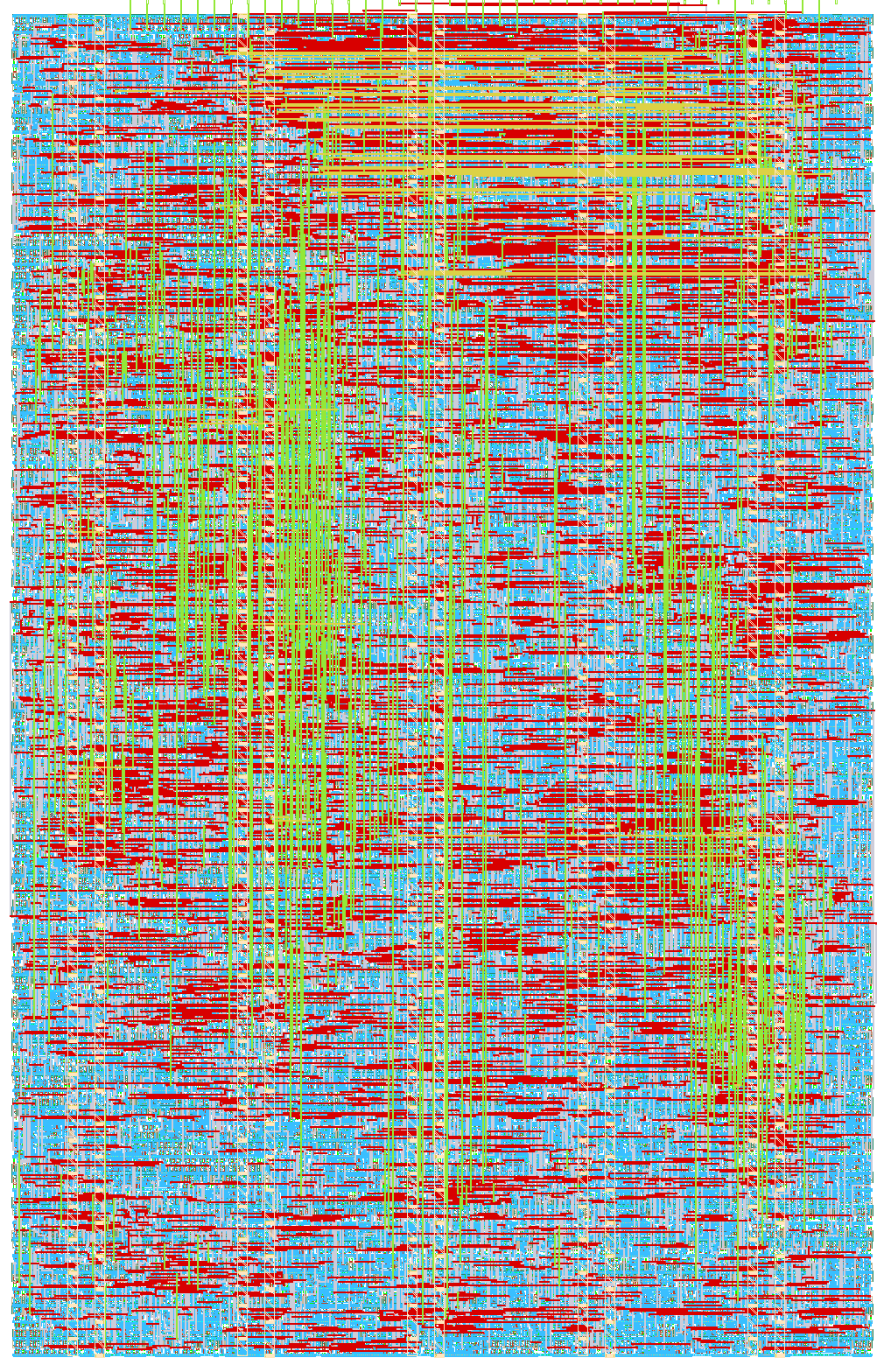
- Author: Aakash KT
- Description: Simple compute accelerator, connected via USB and driven with a C++ API and code on the host PC.
- GitHub repository
- Open in 3D viewer
- Open in Tiny Tapeout Explorer
- Clock: 50000000 Hz
How it works
The C++ driver API, build instructions and hardware models for "Preinception" can be found in the PRESM repository.
Architecture
All commands are sent via the C++ driver.
+------------------------------------------------+
|               driver (C++ API)                 |
+------------------------------------------------+
        |           (Host)          ^
        |                           |
--------|------[ 48-bit packet ]----|-------------
        |                           |
        Y           (Device)        |
+------------------------------------------------+
|                   UARTPacket                   |
|     +-------------+           +-------------+  |
|     |   UARTRx    |           |   UARTTx    |  |
|     +-------------+           +-------------+  |
|                                                |
+------------------------------------------------+
        |                           ^
        |                           |
        Y                           |
+------------------------------------------------+
|                   Command                      |
|                  Processor                     |
|                     (CP)                       |
+------------------------------------------------+
Host-Device packet structure (48-bit packet)
+-----------------------------------------------+-------------------+
|            16-bit header                      |   32-bit body     |
++----------------------------------------------+-------------------+
|| 4-bit     | 4-bit   | 4-bit   | 4-bit       ||   32-bits data   ||
|| Unique ID | Type    | Command | Sub-command ||                  ||
++--------------------------------------------------+---------------+
How to test
<b>Prerequisits</b>
- A Linux PC with a spare USB port
- The demo board from Tiny Tapeout
<b>Notes</b>
- The code is officially tested on Ubuntu
- You can also use Ubuntu under WSL.
- With WSL however, the underlying port to which the demo board is connected will have to be exposed to WSL
Clone PRESM and navigate to the cloned directory.
Build the Tiny Tapeout config for Preinception:
python scripts/build.py --config hw_configs/preinception/serial_tapeout_tt_ihp26b.json
Next, we need to connect the chip to the PC.
The chip can be connected in two ways:
- Connect the demo board to the PC with USB.
- With an exteral UART module attached to the demo board. The UART module is connected to the PC with USB.
As of now, not sure which one will work, so give both a go when chips become available.
You may need to run the following command to activate the FTDI drivers:
sudo modprobe ftdi_sio
Direct Demo Board Connection
This is straightforward. Testing is done by running verification apps:
python scripts/verify.py --config hw_configs/preinception/serial_tapeout_tt_ihp26b.json
You should see an output like so:
++ Copying files from /home/aakashkt/presm/build/verification/ to verify_runs/00491
++ Copying file /home/aakashkt/presm/build/driver/matrix/libmatrix_serial.so to verify_runs/00491
++ Copying file hw_configs/preinception/serial_fpga_tangnano20k.json to verify_runs/00491/hw_config.json
++ ======================
++ PRESM Execution Begin
++ ======================
++ Changing working directory to: /home/aakashkt/presm/verify_runs/00491
++ Executing: ./verification sanity device
++ Environment:
{'LD_PRELOAD': 'libmatrix_serial.so'}
++ Changing working directory to: /home/aakashkt/presm
++ ======================
++ PRESM Execution End
++ ======================

++ Changing working directory to: /home/aakashkt/presm/verify_runs/00491
++ Executing: ./verification sanity host
++ Changing working directory to: /home/aakashkt/presm

++ Verification of "sanity" succeeded.

++ ======================
++ PRESM Execution Begin
++ ======================
++ Changing working directory to: /home/aakashkt/presm/verify_runs/00491
++ Executing: ./verification addition device
++ Environment:
{'LD_PRELOAD': 'libmatrix_serial.so'}
++ Changing working directory to: /home/aakashkt/presm
++ ======================
++ PRESM Execution End
++ ======================

++ Changing working directory to: /home/aakashkt/presm/verify_runs/00491
++ Executing: ./verification addition host
++ Changing working directory to: /home/aakashkt/presm

++ Verification of "addition" succeeded.

.....
.....
Via External UART module
On the demo board:
- Connect output pin 6
uo[6](PIN_HIin datasheet) to input pin 0ui[0](SEL_RX_TXin datasheet).- This changes the UART RX and TX pins from the default to two other free pins
- Next, connect the external UART module
- Connect TX to input pin 7
ui[7](RX_secondaryin datasheet) - Connect RX to input pin 7
uo[7](TX_secondaryin datasheet)
- Connect TX to input pin 7
Now we can run the verification apps like above.
Using the chip with your own code
Make sure you have built Preinception with the tapeout configuration.
python scripts/build.py --config hw_configs/preinception/serial_tapeout_tt_ihp26b.json
The build creates a package of the driver in packages/, which looks like:
├── packages/
│   ├── matrix/
│   |   ├── include/
|   |   |   ├── matrix.h # Driver API header
|   |   ├── lib/
|   |   |   ├── libmatrix_serial.so # Driver library
Lets compile a simple C++ code that uses the driver to add two numbers on preinception.
#include "include/matrix.h"
#include <iostream>

int main()
{
    mInit(); // Initialize the driver

    // Allocate memory for device, and initialize it
    MIntDeviceMemory a(-64);
    MIntDeviceMemory b(-80);
    MIntDeviceMemory c(10);

    mAdd(a, b, c); // Call add on 'a' and 'b', store in 'c'
    mSync(); // Wait for device to finish

    std::cout << a.getValue() << " + " << b.getValue() << " = " << c.getValue() << std::endl;

    mFree(); // Free driver resources
}
Compilation needs to link with the driver library:
g++ main.cpp -L./lib/ -lmatrix_serial -o main -Wl,-rpath,./lib
Running the program:
$ ./main
-64 + -80 = -144
Failure cases
- The driver currently assumes that the device shows up in one of these:
/dev/ttyUSB0-->/dev/ttyUSB4- Essentially, it searches for and does a handshake protocol for devices from index 0 to 4.
- If the device shows up in another name or after index 4, the driver will quit with an error.
External hardware
Possibly requires an external UART-USB module.
IO
| # | Input | Output | Bidirectional |
|---|---|---|---|
| 0 | SEL_RX_TX | ||
| 1 | |||
| 2 | |||
| 3 | RX_primary | ||
| 4 | TX_primary | ||
| 5 | |||
| 6 | PIN_HI | ||
| 7 | RX_secondary | TX_secondary |