38 Lightscan
38 : Lightscan
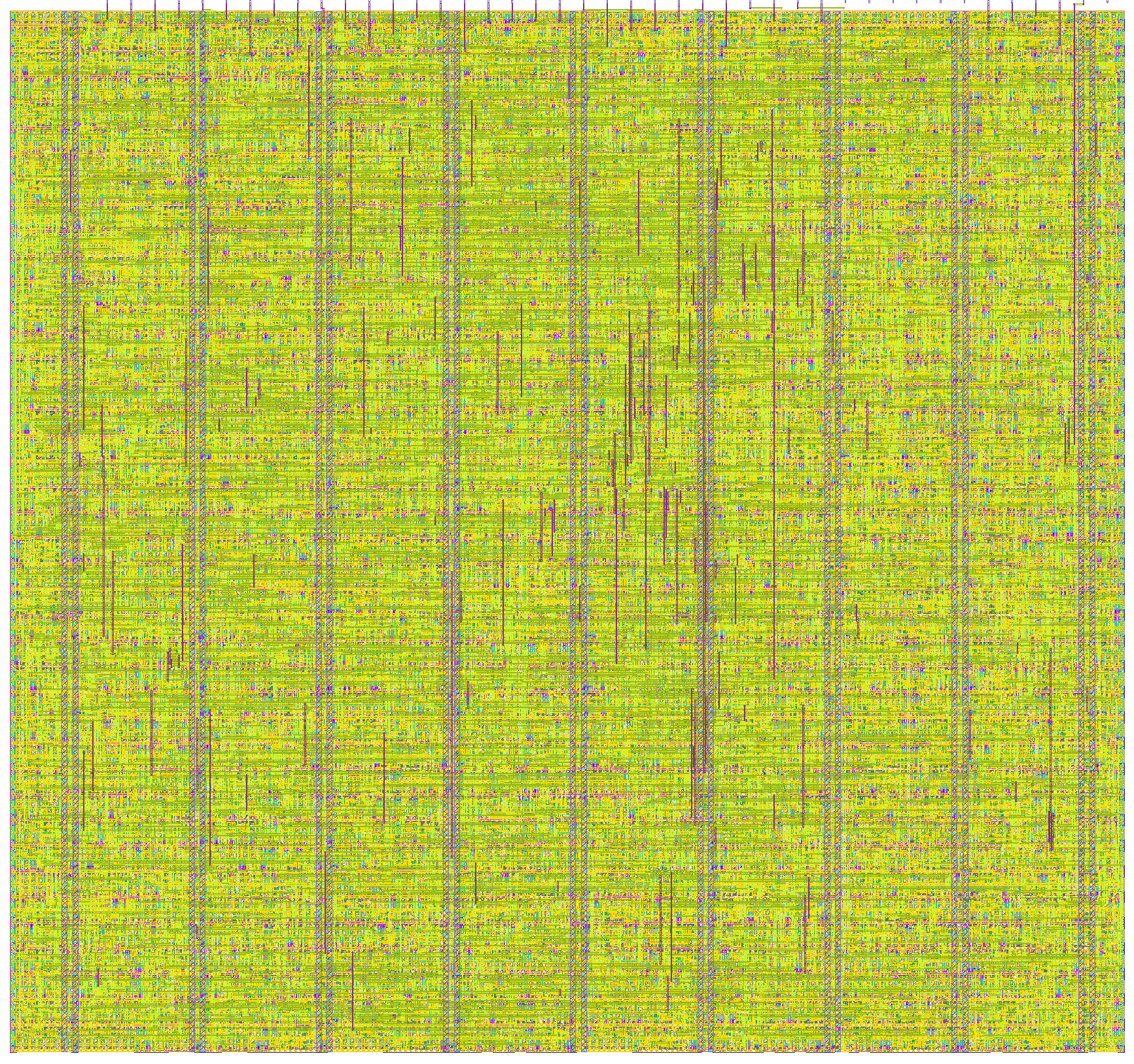
- Author: Emilio Perez Juarez
- Description: BISS-C Position acquisition system for a scan with pulsed output.
- GitHub repository
- Open in 3D viewer
- Open in Tiny Tapeout Explorer
- Clock: 12000000 Hz
How it works
It contains a BISS-C master to obtain position from an absolute encoder, it also produces a pulse output to synchronize an external equipment trigger with the position acquisition. The SPI register interface must be used with CPOL=1 and CPHA=1, the frame structure is cmd(8 bits) + data(32 bits), in which the top bit of cmd indicates if it is a read(0) or a write(1), the remaining bits of cmd indicates the register number.
Some extra features available are:
- BISS-C delay compensation.
- Spare UIO control via registers which can be synchronized with the trigger.
Registers
REG0(RO): Magic ID 0xCAFEA51C
REG1(RO): Counters, number of positions acquired(bits 15 downto 0), number of position errors(bits 23 downto 16), number of position overruns(bits 31 downto 24).
REG2(RO): Last position acquired.
REG3(RW): Trigger period(minus one), separation in ticks between triggers.
REG4(RW): Number of triggers(minus one).
REG5(RW): Pulse width(minus two).
REG6(RW): BISS-C half clock period(minus one).
REG7(RW): BISS-C clock number of rising edges(minus one).
REG8(RO): High bits of last position acquired.
REG9(WO): Action register, bit 0 gets a single position, bit 1 starts acquisition, bit 2 produces a single trigger.
REG10(RW): When read, spare IO Input value during last trigger, when written, it controls outputs(set after next trigger), the value is set in the first byte, the direction is set in the second byte(0=input, 1=output).
REG11(RW): When read, spare IO Input value during, when written, it controls outputs, the value is set in the first byte, the direction is set in the second byte(0=input, 1=output).
How to test
- Plug a BISS-C encoder via a RS422 transceiver (with clock as output and data as input).
- Optionally plug an external instrument to the pulse output.
- Configure register, for example, at frequency 12MHz, the following register writes configures a 10s acquisition at 0.1s intervals, BISS-C bitrate at 1MHz and an encoder that has a 14 bits position: REG3 = 1199999; REG4 = 99; REG6 = 5; REG7 = 26;
- Start the acquisition by writing REG9 = 2
- Collect the position from REG2 whenever there is a position ready event, this can be detected using an interrupt.
External hardware
- A RS422 transceiver for the BISS-C absolute encoder.
- Anything that could be triggered by a pulse, e.g. a camera.
IO
| # | Input | Output | Bidirectional |
|---|---|---|---|
| 0 | SPI CS_N | RUNNING | BISS-C CLK |
| 1 | SPI CLK | PULSE | BISS-C DATA |
| 2 | SPI MOSI | POSITION READY EVENT | IO2 |
| 3 | SPI MISO | IO3 | |
| 4 | IO4 | ||
| 5 | IO5 | ||
| 6 | IO6 | ||
| 7 | IO7 |