240 8-bit Prime Number Detector
240 : 8-bit Prime Number Detector
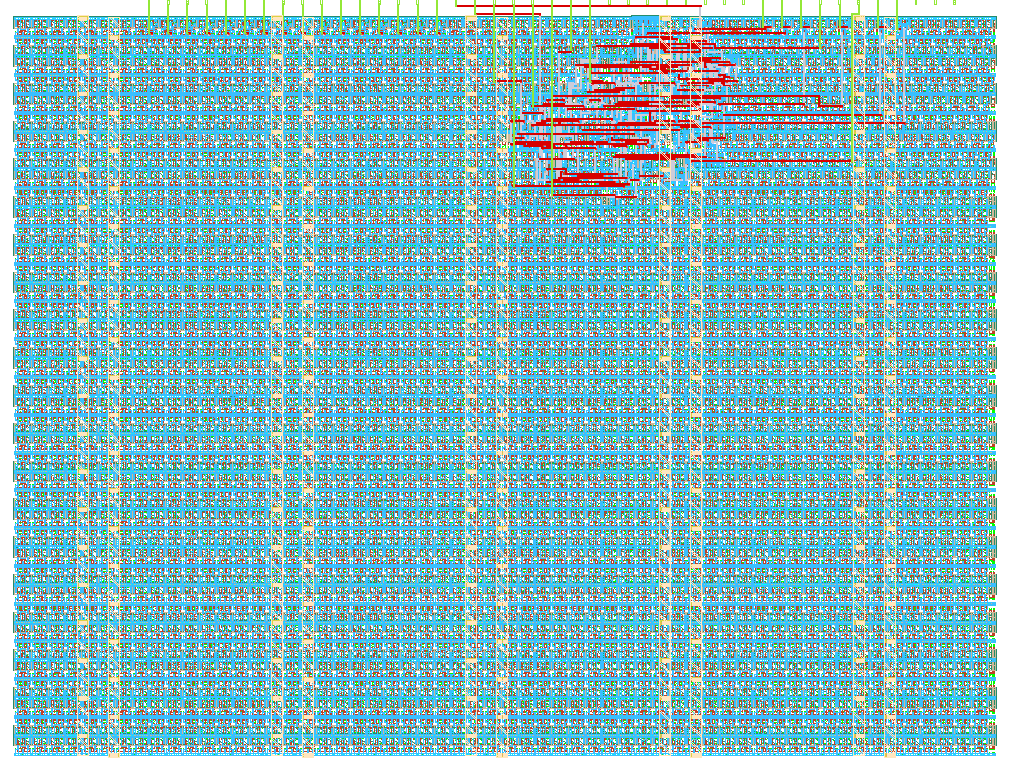
- Author: Niklas Oberhuber
- Description: Set 8 DIP switches to any number 0-255. The 7-segment display shows its hex digit; the decimal point lights up if the number is prime.
- GitHub repository
- Open in 3D viewer
- Open in Tiny Tapeout Explorer
- Clock: 0 Hz
How it works
This is a purely combinational 8-bit prime number detector. It tests every number from 0 to 255 in hardware using a 256-bit lookup table (one bit per number, pre-computed at synthesis time). The result is available with zero latency — no clock required.
The 7-segment display shows the lower hex nibble of the input number (0–F), and the decimal point lights up when the number is prime. There are 54 primes in the range 0–255, from 2 up to 251.
The entire design uses ~100 logic gates: a 256-bit ROM for the prime lookup and a 16-entry hex decoder for the display.
How to test
- Set
ui[7:0]to any number using the DIP switches. - Read the lower nibble from the 7-segment display (0–F).
- Decimal point lit = prime. Decimal point off = not prime.
Try scanning through numbers by flipping switches — you can find all 54 primes between 0 and 255by watching the decimal point.
Some interesting numbers to try:
| Number | Prime? | Notes |
|---|---|---|
| 2 | yes | Smallest prime; only even prime |
| 7 | yes | |
| 9 | no | 3 × 3 — a common mistake |
| 127 | yes | Mersenne prime (2⁷ − 1) |
| 128 | no | 2⁷ |
| 251 | yes | Largest prime ≤ 255 |
| 255 | no | 3 × 5 × 17 |
External hardware
None required. The 7-segment display is built into the TinyTapeout demo board.
IO
| # | Input | Output | Bidirectional |
|---|---|---|---|
| 0 | Number bit 0 (LSB) | Segment a | |
| 1 | Number bit 1 | Segment b | |
| 2 | Number bit 2 | Segment c | |
| 3 | Number bit 3 | Segment d | |
| 4 | Number bit 4 | Segment e | |
| 5 | Number bit 5 | Segment f | |
| 6 | Number bit 6 | Segment g | |
| 7 | Number bit 7 (MSB) | Decimal point (1 = prime) |