336 UART-ALU Processor
336 : UART-ALU Processor
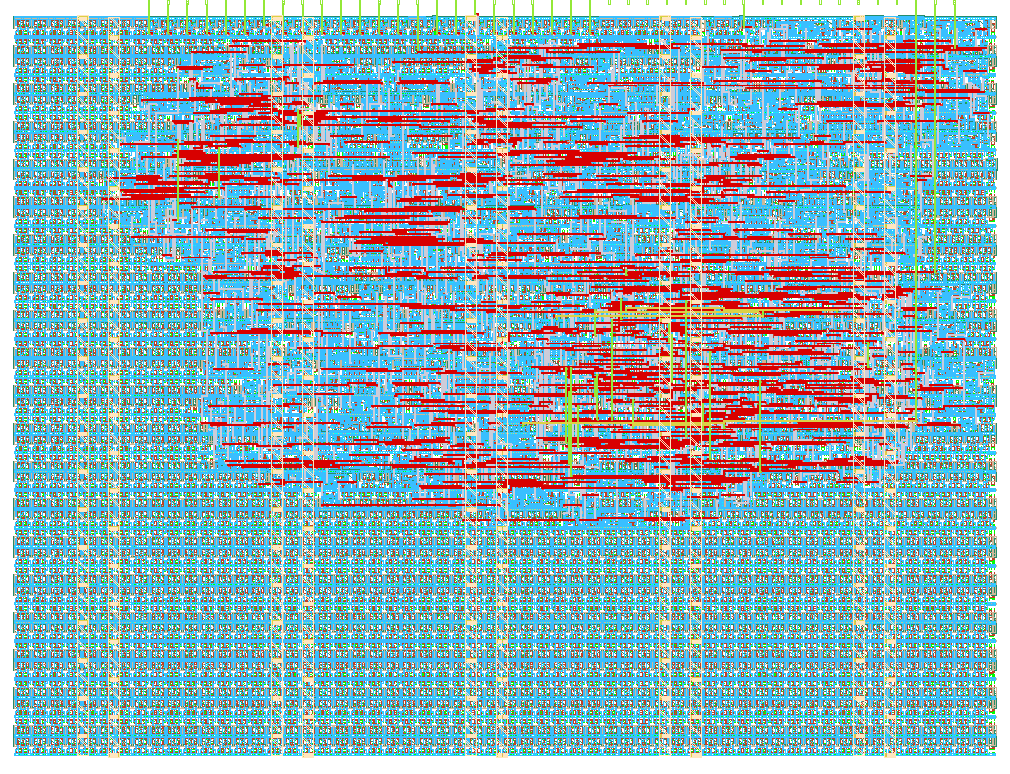
- Author: Lukas Kämpf
- Description: 8-bit ALU controlled via UART – send opcode + two operands, get the result back
- GitHub repository
- Open in 3D viewer
- Open in Tiny Tapeout Explorer
- Clock: 50000000 Hz
How it works
This design is a small UART-driven ALU processor. It receives three bytes over UART (opcode, operand A, operand B), computes the result with an 8-bit ALU, and sends the result byte back over UART.
- Protocol: 8N1 (idle=1, start=0, 8 data bits LSB first, stop=1). Default baud rate is 115200 at 50 MHz clock.
- Frame: Send exactly 3 bytes: Byte 1 = opcode (0x00–0x07), Byte 2 = A, Byte 3 = B. The chip responds with 1 byte (the 8-bit result).
Opcodes
| Opcode | Name | Operation (8-bit) |
|---|---|---|
| 0x00 | NOP | 0 |
| 0x01 | ADD | A + B |
| 0x02 | SUB | A - B |
| 0x03 | AND | A & B |
| 0x04 | OR | A | B |
| 0x05 | XOR | A ^ B |
| 0x06 | SHL | A << B[2:0] |
| 0x07 | SHR | A >> B[2:0] |
How to test
- Connect UART: RX = chip receive (your host TX), TX = chip transmit (your host RX). Set RP2040 clock to 50 MHz and UART adapter to 115200 baud 8N1.
- Send three bytes: opcode, A, B (e.g.
0x01 0x14 0x1Efor ADD 20 + 30). - Read one byte from the chip; that is the result (e.g. 50 for the example above).
Example (hex): send 01 14 1E → expect 32 (50).
Simulation: The full test (make test-full) uses a synchronous UART sender in the testbench (uart_tb_sender.v) with overridden parameters (100 kHz clock, 4800 baud) so RX is driven with exact 16 cycles/bit on the same clock as the DUT.
External hardware
- UART adapter (e.g. USB–serial at 115200 8N1, 3.3 V) connected to uio[0] (RX) and uio[1] (TX).
IO
| # | Input | Output | Bidirectional |
|---|---|---|---|
| 0 | RX | ||
| 1 | TX | ||
| 2 | |||
| 3 | |||
| 4 | |||
| 5 | |||
| 6 | |||
| 7 |