199 Very Low Resource Digital Implementation of Bioimpedance Analysis
199 : Very Low Resource Digital Implementation of Bioimpedance Analysis
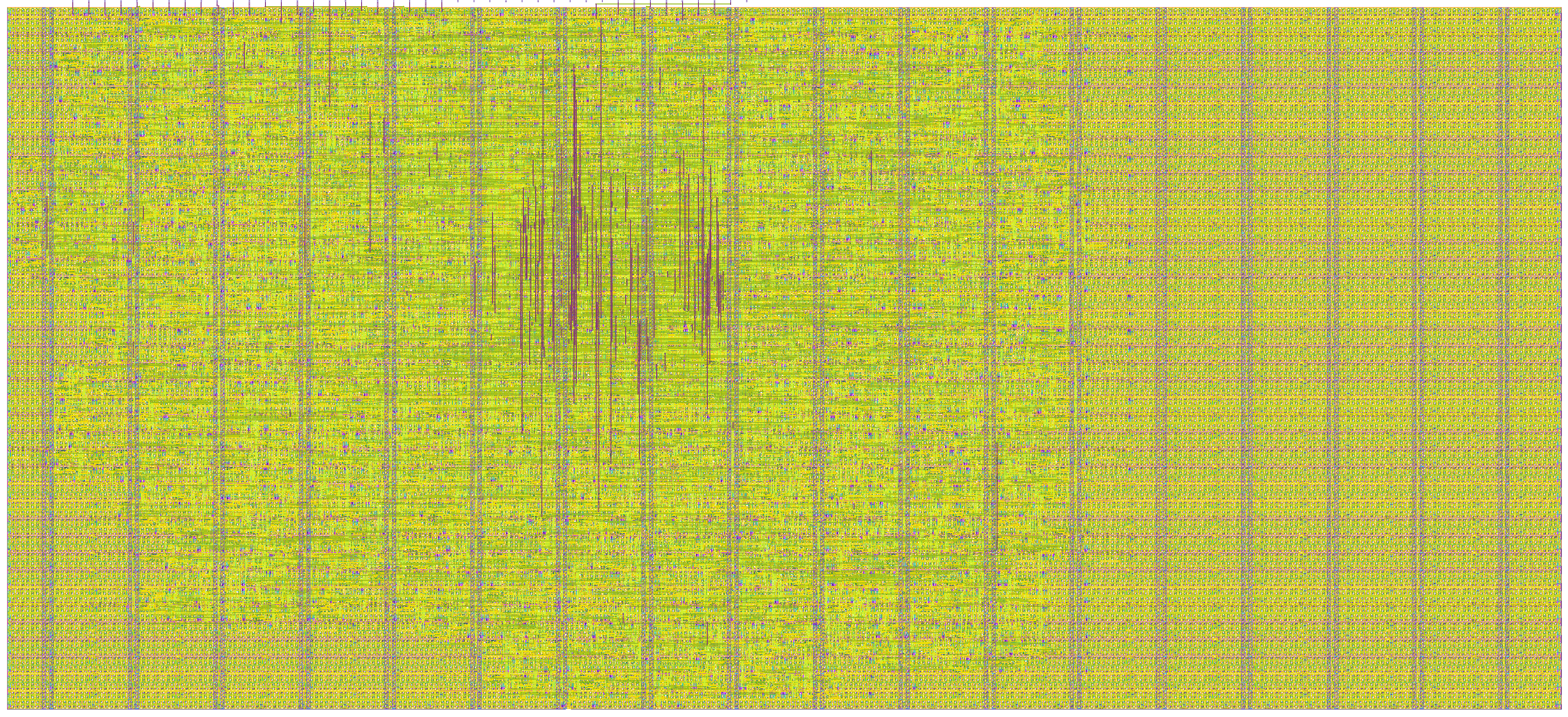
- Author: Fabien
- Description: Digital bioimpedance demodulator with 8-stage I/Q cascade and UART output
- GitHub repository
- Open in 3D viewer
- Open in Tiny Tapeout Explorer
- Clock: 1000000 Hz
How it works
This project is a digital bioimpedance demodulator made in GF180 technology. It uses eight I/Q stages. Each stage takes a 1‑bit input signal from a sigma-delta ADC and a clock The clock is divided by two at every stage. This means each stage works at a lower frequency than the one before. Each stage gives two values of 8 bits: one for I and one for Q. All eight stages produce 128 bits in total. These bits are stored in a register. When the data is ready, a signal triggers transmission. The UART module then sends the 16 bytes on the TX pin (uio[0]). Results can also be read via the 16 to 1 MUX using the MUX_ADDR pins
How to test
Turn on the board with the Tiny Tapeout setup.
Connect the 1‑bit ADC signal to ui[0].
Reset the chip by pulling rst_n low, then high.
Use ui[1:4] (MUX_ADDR[0:3]) to select which byte to read on uo[0:7] (MUX_OUT).
Read the UART output on uo[0] with 9600 bauderate
The chip sends 16 bytes. For each stage, you receive two bytes: first Q, then I.
Stage 0 is the fastest. Stage 7 is the slowest.
You can also use a USB‑UART adapter and a serial terminal to see the data (Putty for example).
To read via MUX:set MUX_ADDR (ui[1:4]) to select the desired byte (0 to 15).
Read the result on uo[0:7] (MUX_OUT).
External hardware
A 1‑bit signal source (for example a sigma‑delta ADC) connected to ui[0]. A USB-UART adapter connected to uio[0] (TX) for serial readout.
IO
| # | Input | Output | Bidirectional |
|---|---|---|---|
| 0 | ADC_IN | MUX_OUT[0] | TX |
| 1 | MUX_ADDR[0] | MUX_OUT[1] | CLK_SORTIE |
| 2 | MUX_ADDR[1] | MUX_OUT[2] | DAC_OUT |
| 3 | MUX_ADDR[2] | MUX_OUT[3] | QOUT |
| 4 | MUX_ADDR[3] | MUX_OUT[4] | |
| 5 | BASCULE_IN | MUX_OUT[5] | |
| 6 | MUX_OUT[6] | ||
| 7 | MUX_OUT[7] |