IEEE Guatemala, 40 students, 39 tapeouts
A two-day workshop, in collaboration with IEEE, for 40 undergraduate students.
Tiny Tapeout Team
•14 November 2026
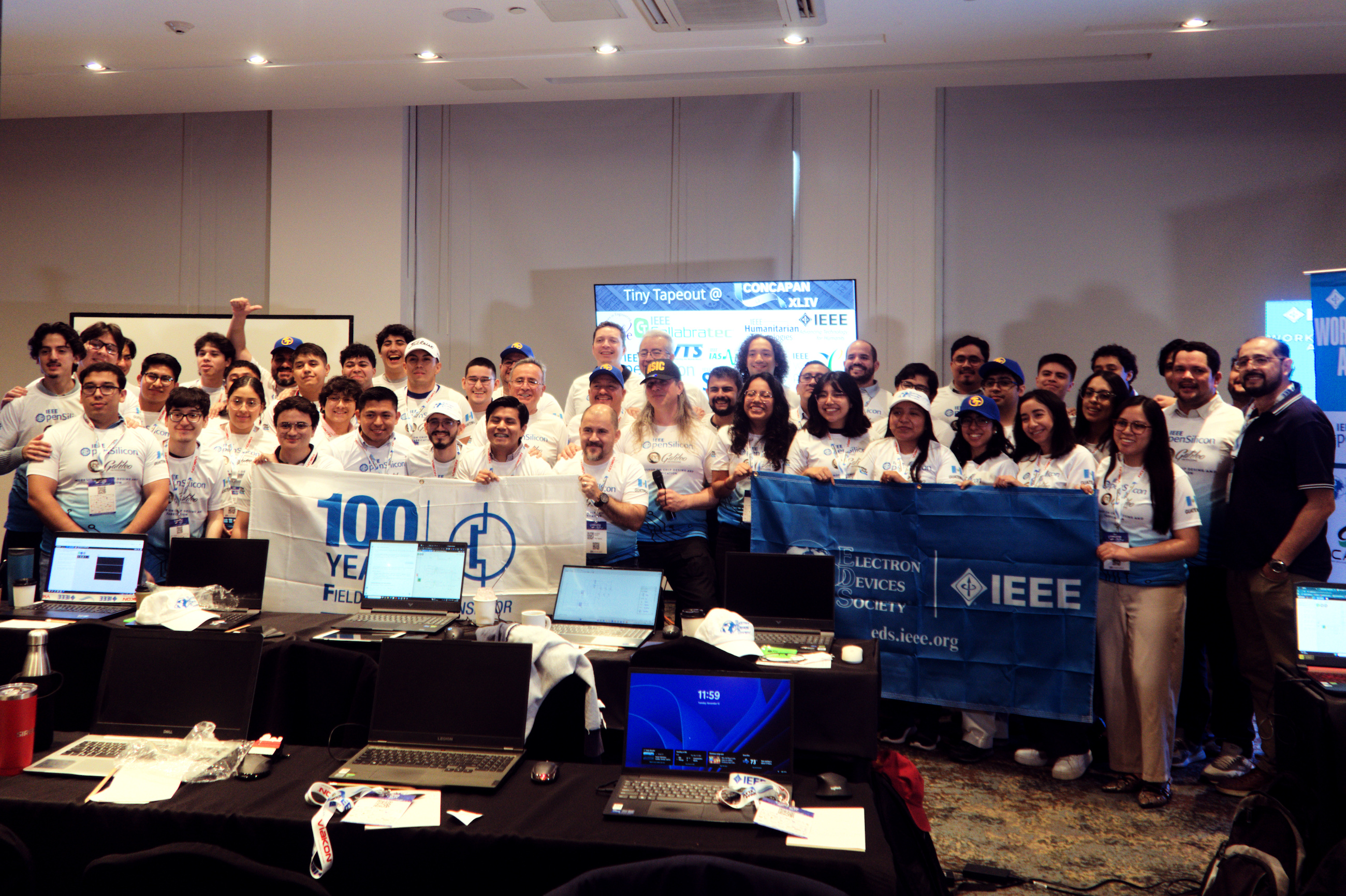
IEEE Guatemala 2026
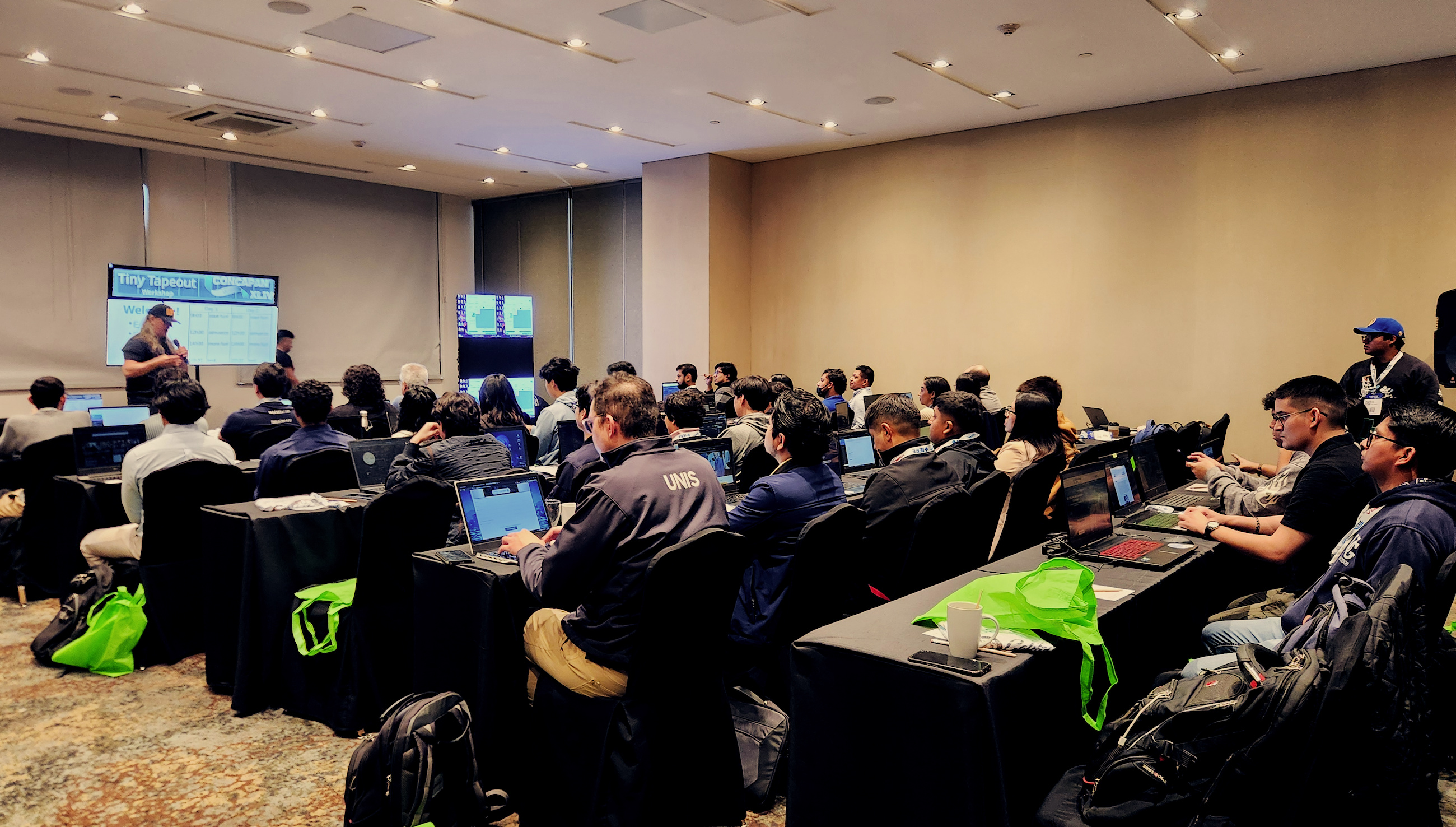
Tiny Tapeout and IEEE Guatemala ran a two-day chip design workshop on November 10 and 11, 2026, as part of the IEEE Central America and Panama Convention (CONCAPAN XLIV).
The workshop was built for undergraduate university students and had one aim: to introduce open source tools and help each participant generate a Tiny Tapeout chip. Pat Deegan from the Tiny Tapeout team led the sessions.
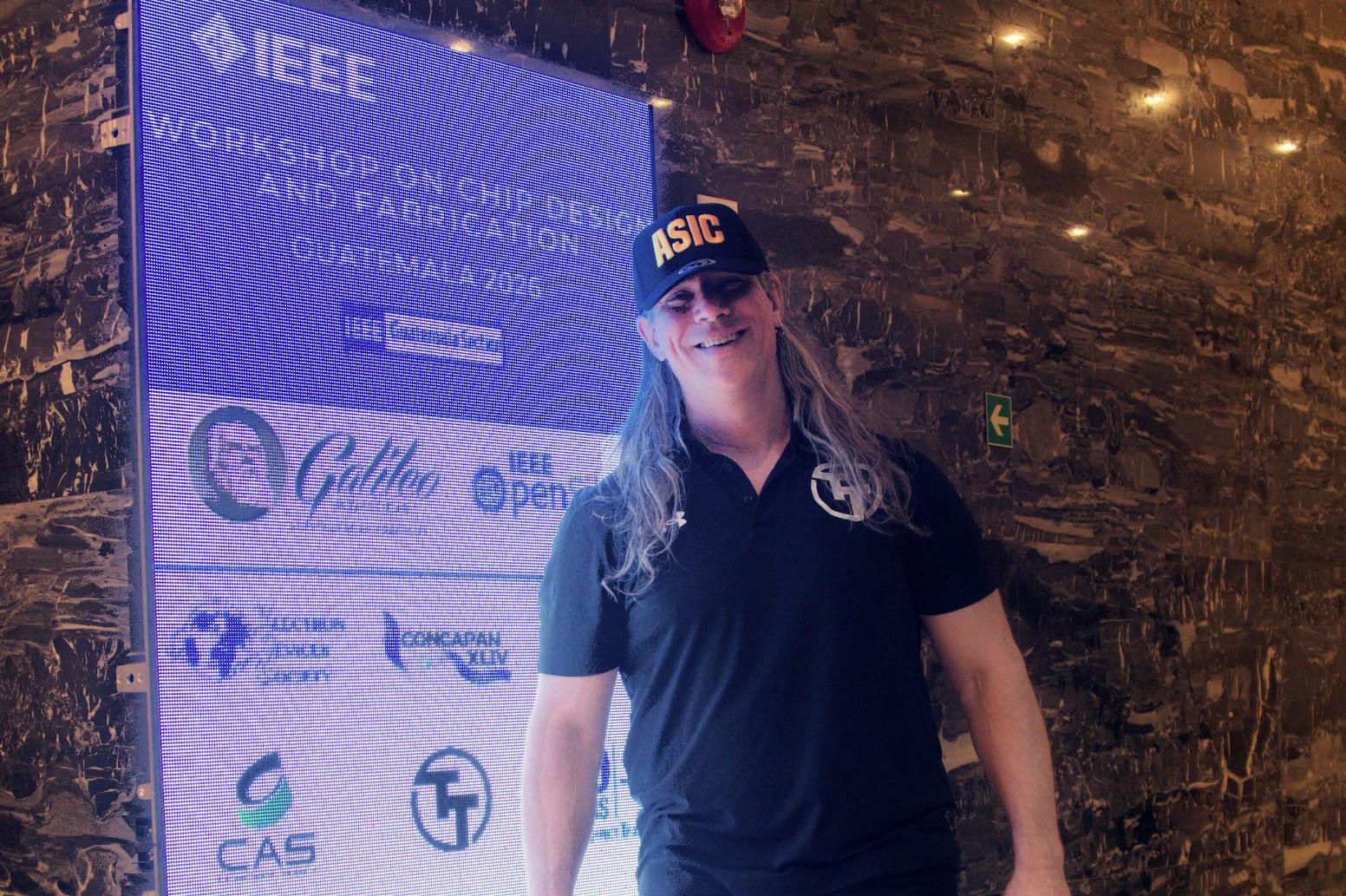
Pat Deegan
By the end, 39 tapeouts were submitted. Participants moved through the full process, from writing a design to seeing the hardened GDS layout.
Not only did they learn the technicalities of chip design, but they also enjoyed every bit of it.
The energy in the room played a huge role in the workshop’s success.
“Loved the whole process of going from design to chip. Loved the freedom of being able to get creative with design constraints.”
“The presenter was a really passionate guy that makes this workshop really enjoyable!”
“Pat was really excited while giving the workshop and it was contagious.”
“Pat’s energy made the workshop really interesting, the presentation and the slides were cool and the chips and devboards show the results of all the process of Tiny Tapeout.”
Participants also liked how hands-on the sessions were.
“The flow from Verilog to a hardened GDS was straightforward, and the VGA playground made it easy to get a visible result on real hardware quickly.”
“Me gusto que el curso fue interactivo no te aburrias habian actividades programadas.”
“Todo, estuvo muy bien y entretenido.”
Looking back, the two days were more than a technical course. For many participants, this opened a door to ideas they hadn’t considered before, and a sense of what they could build next!
Thank you to IEEE Guatemala for working with us on this workshop, and to every participant who showed up for the two full days.
This wouldn’t be possible without Galileo Universidad and the IEEE Division I Open Silicon Initiative. Thank you for your efforts to provide open access, standardized tools, and global mentoring to students and researchers eager to learn physical chip design.
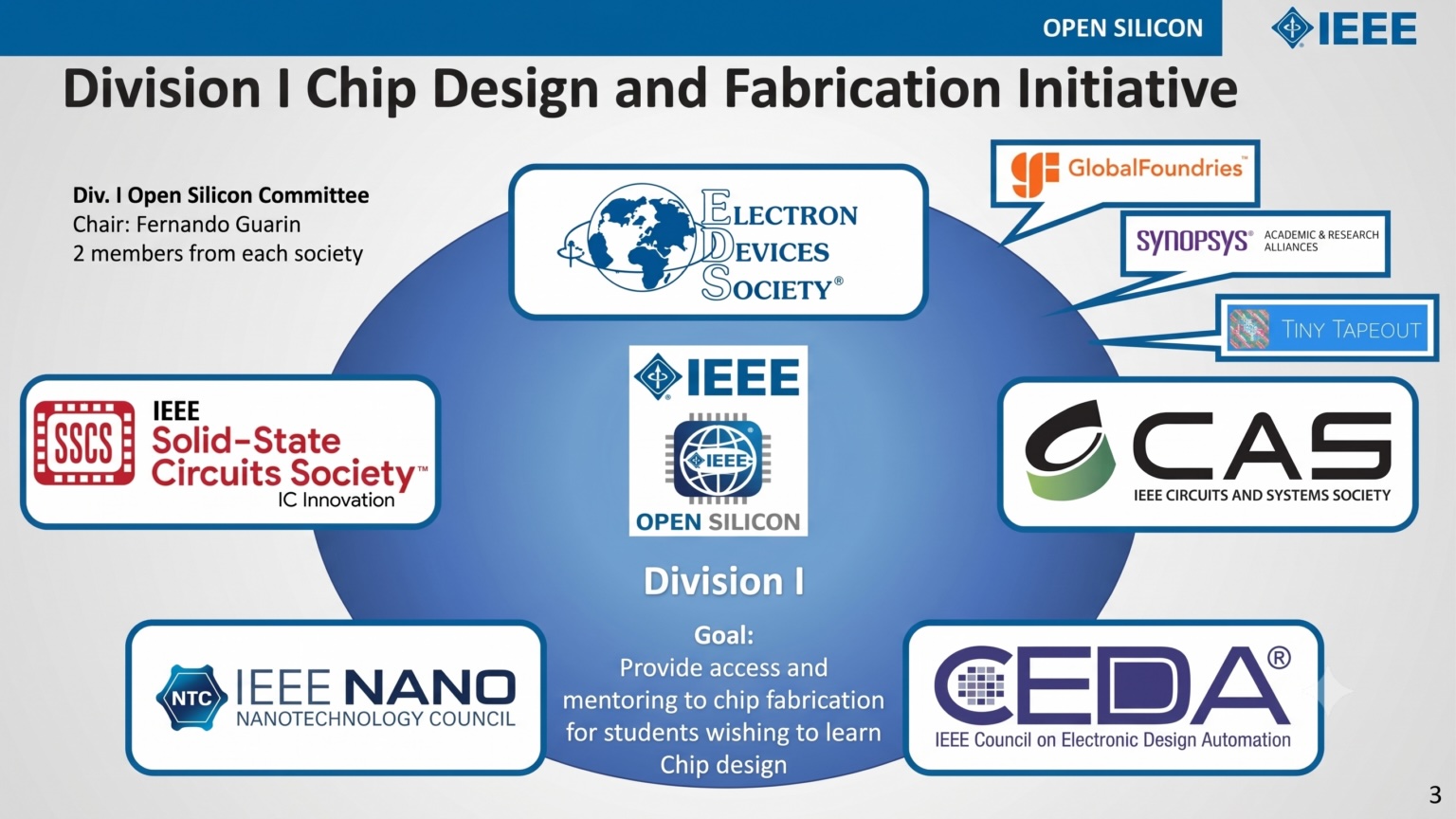
IEEE Open Silicon
If you enjoyed this article, please consider signing up to our newsletter below.
Last modified by Matt Venn on 17 November 2026. Commit cc70cdc. Suggestions?